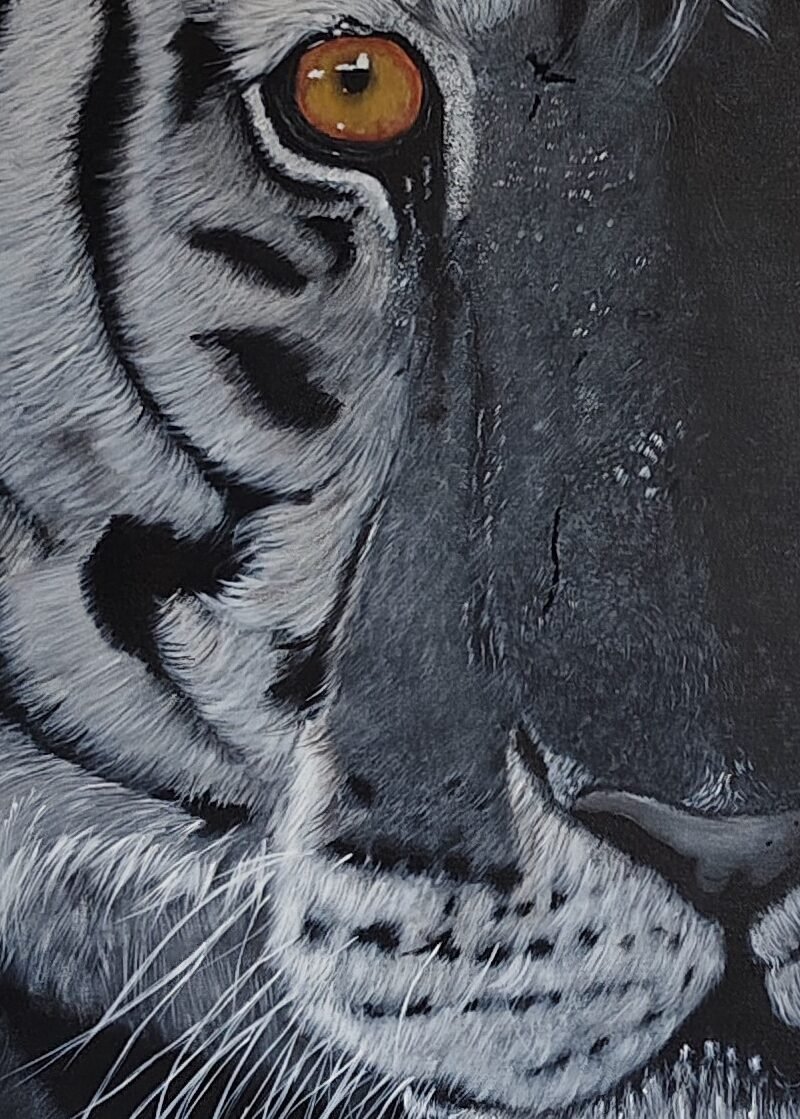
The true power of the piece lies in the striking duality: while half the face remains masked in stealthy darkness, a single pair of fiery amber eyes pierces through the canvas. It is a visual study of a hunter waiting for the perfect micro-second to strike—radiating an intense, magnetic aura of untamed majesty, survival instinct, and supreme intelligence.
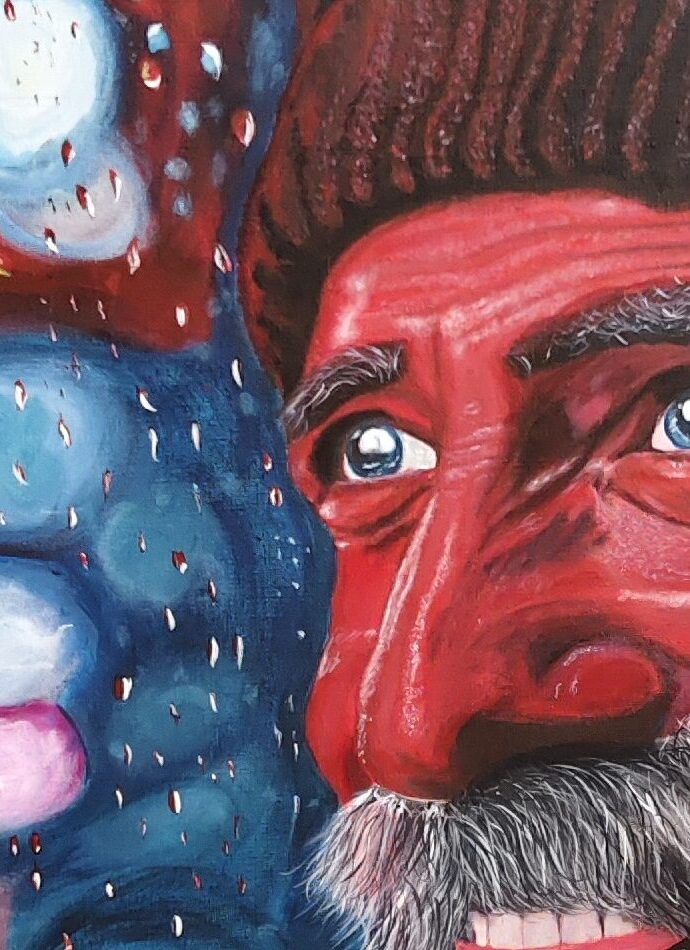
The darkness surrounding him symbolize solitude or the passage of time, while his shiny eyes reflect vitality, hope, or a moment of joy despite the somber setting.
The smile suggests contentment or nostalgia, possibly recalling cherished memories or quietly appreciating what lies beyond. The composition used soft light illuminating his face partially, emphasizing the expressive eyes and the gentle smile, while the window he gazes through hint at an unseen world of possibilities or a connection beyond his confined space.
The painting balances themes of age and vitality, darkness and light, solitude and connection, capturing a poignant, intimate moment of human experience.
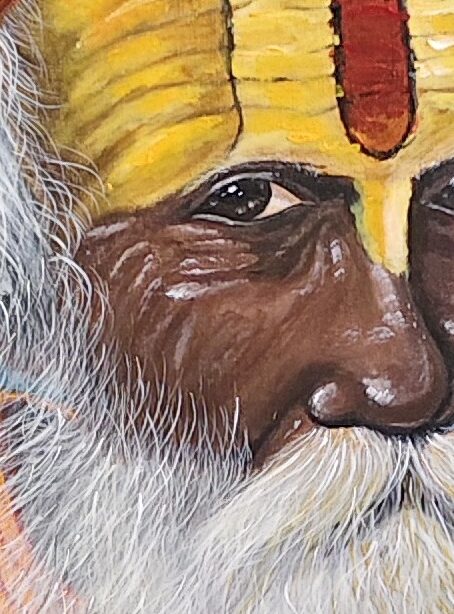
This evocative portrait captures the profound stillness of an Indian saint, rendered with masterful restraint and spiritual intensity. His deep umber skin, weathered and luminous, speaks of a life lived under open skies and in quiet communion with the divine. His long, flowing white beard cascades like a river of time, each strand painted with delicate, deliberate strokes that echo the rhythm of breath and prayer.
Crowning his head is a voluminous orange turban, loosely wrapped and softly contoured, glowing in hues of saffron, rust, and ochre. The folds are sculpted with painterly sensitivity, suggesting both the humility of a renunciate and the quiet majesty of a spiritual elder. The turban is not sharply defined, but rather breathes with the softness of worn fabric and sacred fire.
His forehead bears a bold sectarian mark—a tilak painted in vermilion and ash white, vertically aligned and unapologetically vivid. It is the spiritual axis of the composition, drawing the viewer’s gaze to the seat of inner vision and divine awareness.
Draped around his body is a flowing orange religious cloth, rendered in sweeping, expressive strokes. The fabric envelops him like a flame—its folds and creases alive with movement, yet grounded in stillness. The cloth is not merely a garment, but a symbol of renunciation, purity, and spiritual discipline. Its color—deep saffron—resonates with the sacred, echoing the robes of monks and the fire of transformation.
Color Palette
Earth tones: Rich umbers, burnt sienna, and raw ochre ground the portrait in natural realism.
Spiritual hues: Saffron, vermilion dominate the turban, cloth, and tilak, symbolizing fire, purity, and transcendence.
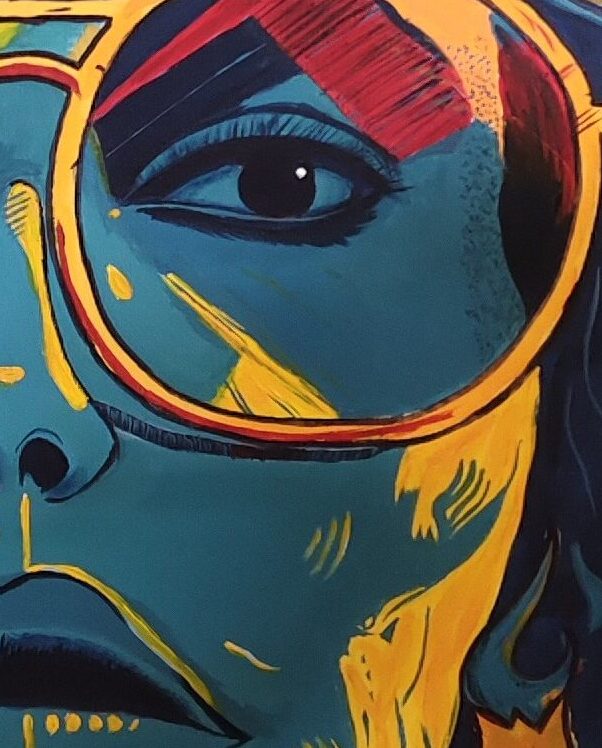
Subject: A confident young woman standing or moving in a bustling cityscape, embodying modern urban culture.
Stype: Contemporary, possibly influenced by street art, pop or abstract expressionism characterized by sharp lines, strong brush strokes or mixed media.
Color Palette: Electric blues, yellows interlaced with contrasting shadows to add depth and energy.
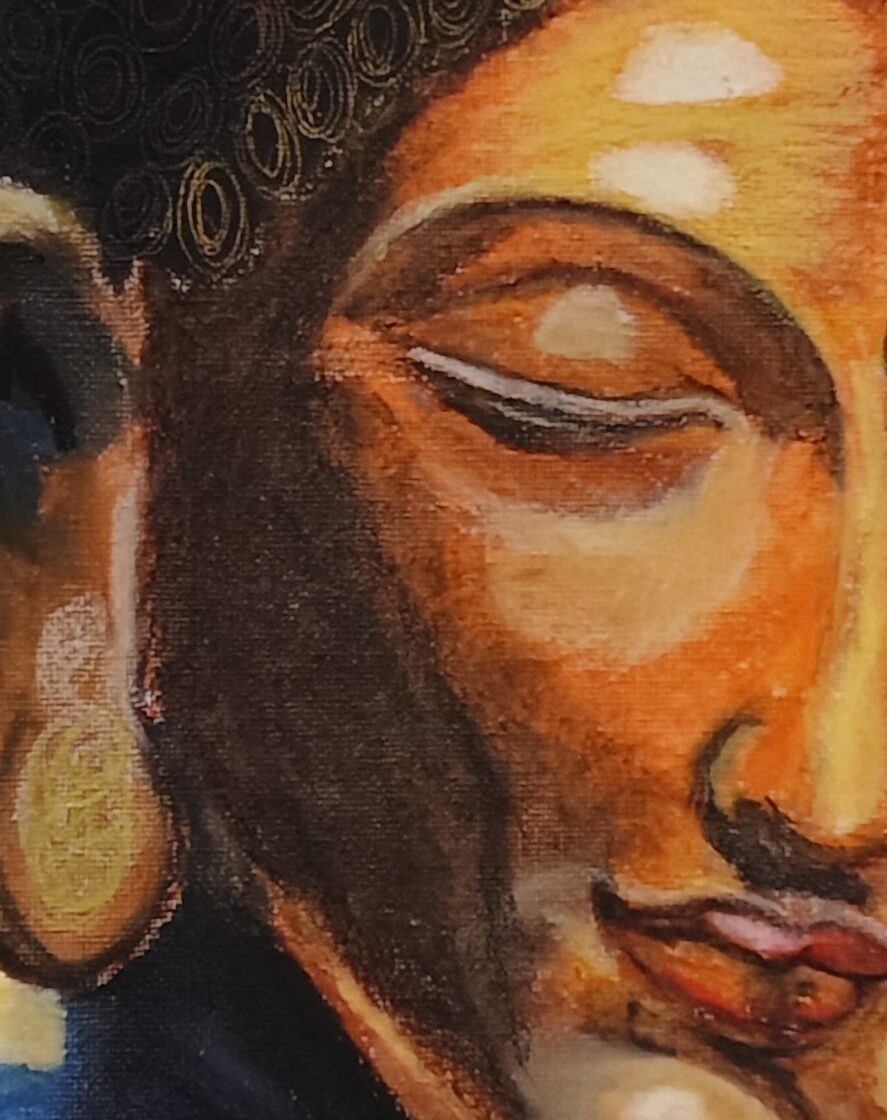
Buddha’s eyes, dreamlike, are drawn in deep indigo, as if dipped in twilight. They gaze inward, inviting the viewer to journey into silence. His lips, gently curved in a knowing smile, are shaded with rosewood and terracotta, echoing the warmth of compassion and the hush of inner peace.
The contours of his face are sculpted with soft transitions—ochres melting into siennas, browns fading into golden light—creating a sense of divine softness. The texture of the crayon lends a tactile intimacy, as if the wax itself remembers the touch of contemplation. The background is a dreamscape of spiritual symbolism. Pale yellow and orange with swirl like evening dusk evoking the serenity of the Bodhi tree under which Buddha attained enlightenment. A soft golden halo at back of his head, not as ornament, but as a quiet proclamation of awakening.

The skin is rendered in a striking spectrum of celestial blues, capturing the rich, uncontainable depth of the infinite cosmos and the deep ocean. This luminous, cool-toned flesh beautifully clashes with the mesmerizing, crystalline clarity of the emerald-green eyes, which are brought to life by meticulously placed liquid highlights reflecting pure, conscious light.
Anchored on the brow by a brilliant golden and vermilion Tilak, the piece radiates a distinct spiritual alertness and an overarching sense of cosmic calm. It is more than a portrait; it is a sacred focal point—a visual representation of absolute presence, deep compassion, and a timeless awareness that looks entirely through you.
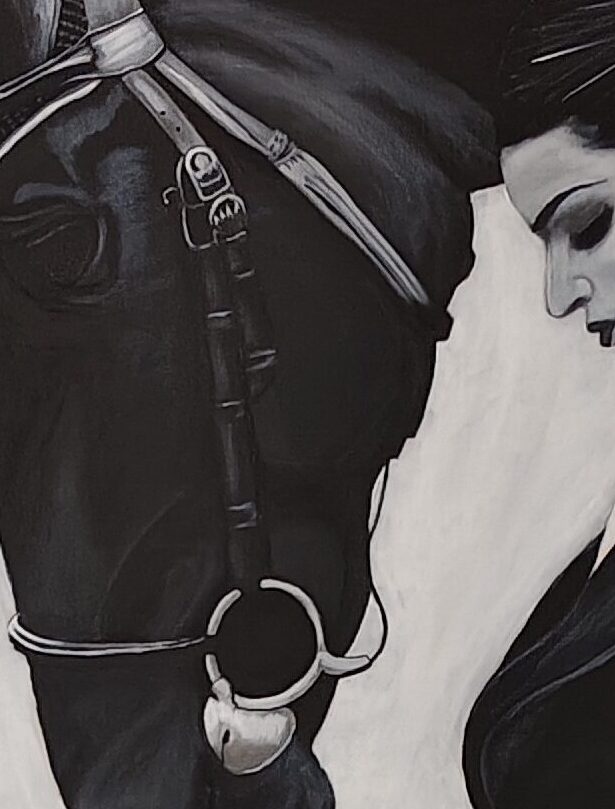
Both figures stand side by side, dominating the canvas with balanced spatial placement.
Style: The contemporary style likely includes minimalistic or abstract elements, with strong contrasts, clean lines, and perhaps geometric or stylized interpretations rather than hyperrealistic details.
Color Palette : The black and white palette intensifies the focus on form, shadow, and light interplay, stripping away the distraction of color to spotlight emotion and structure.
Mood and Tone: The monochrome scheme contributes to a timeless, contemplative mood—evoking themes of innocence, courage, and the bond between human and animal. The girl's rookie status symbolized through posture —curious, tentative—with the horse portrayed as calm & steady.
Symbolism: The juxtaposition of a rookie girl with a horse is a metaphor for new journeys, learning, growth, partnerships that transcend language and species—particularly poignant in contemporary art that often seeks to capture deeper narratives beyond literal depiction.
This figurative painting explores spiritual ecstasy through a vibrant, warm-toned color palette and contrasting textures. The central subject, a stylized holy man, features meticulously detailed facial structures and hair, anchoring the emotional core of the piece. The artist utilizes dynamic, heavily textured brushstrokes for the garland and descending petals to create a sense of physical motion and divine celebration, shifting the work from a standard portrait to an experiential piece on cosmic joy.
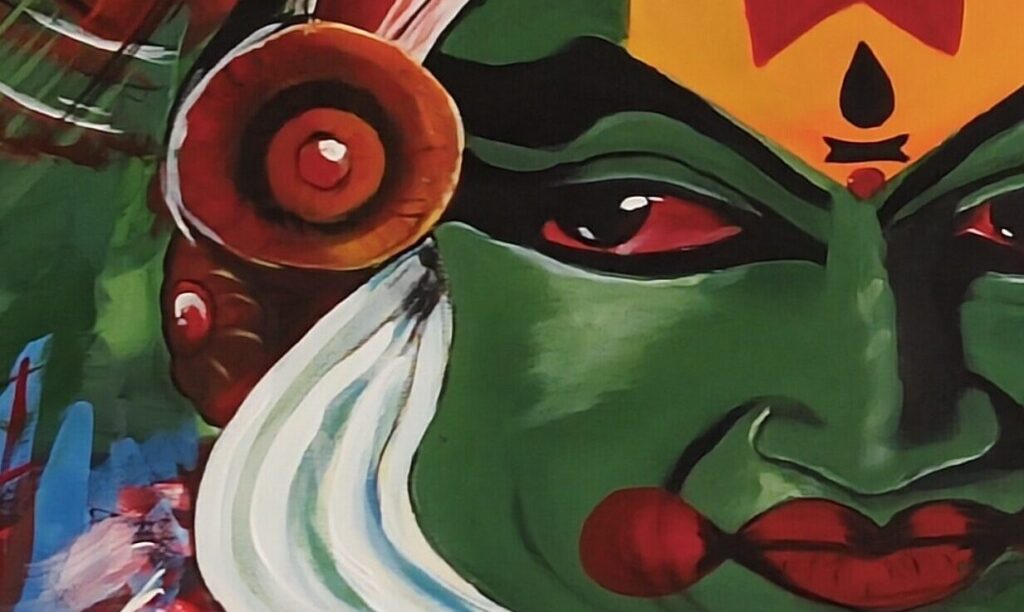
Style & Technique : Executed in a realist-expressionist style, the painting balances find detail with emotional abstraction. The brushwork around they eyes is sharp and deliberate, while the surrounding textures are softened to enhance focus and mood.
Color palette : The palette is rich and theatrical - deep reds, forest greens and stark whites dominate the composition, echoing the traditional Kathakali makeup and costume. A dark, muted background isolates the subject , allowing vibrant face to emerge with striking clarity and intensity.
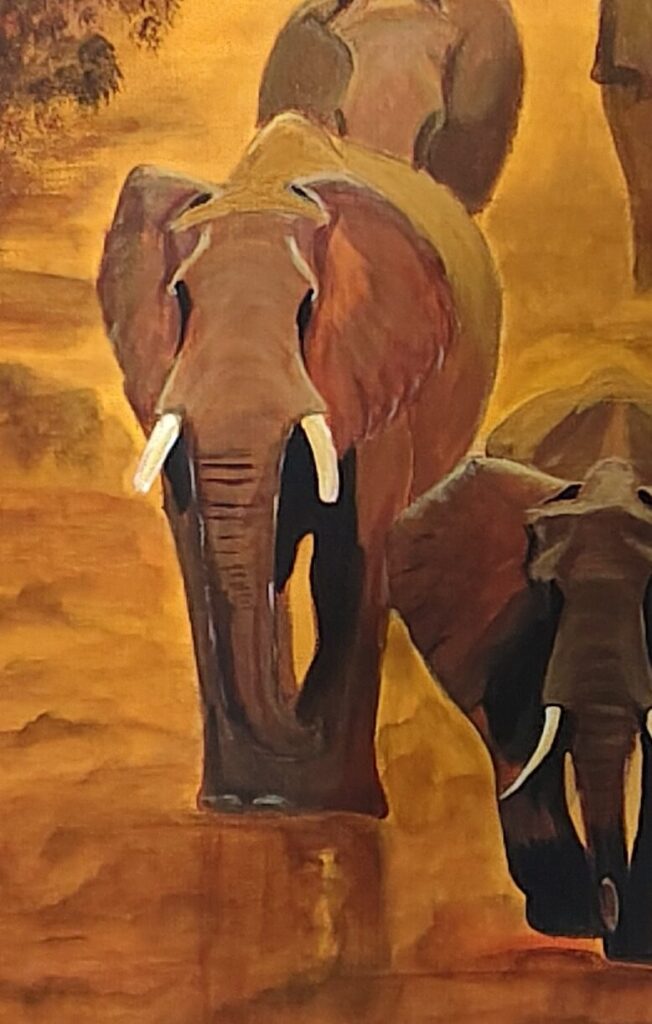
What makes the scene hauntingly beautiful is the reflection - not from water, but from the dusty earth itself, catching the low sun's rays and mirroring the elephants is a shimmering, surreal way. It's as if the ground remembers every step they've taken.
Painting evokes a sense of timelessness and reverence - a tribute to the ancient rhythm of life, the bond between generations, and the sacred silence of dusk in the wild.
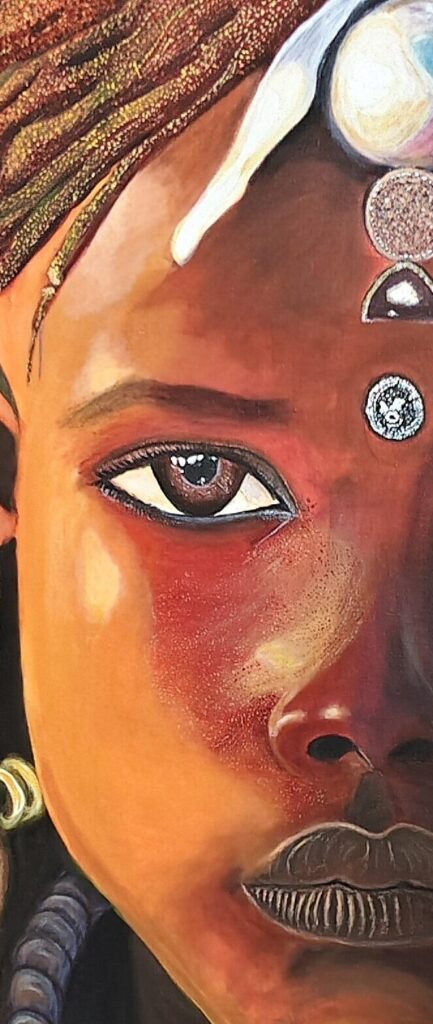
The girl’s face is decorated where each color carrying symbolic meaning: black symbolizing power and mystery, white signifying purity and hope, red indicating vitality and energy, and yellow representing joy and warmth.
Her jewelry consists of handcrafted, symbolic adornments such as beaded necklaces, and earrings, often made from materials sourced locally — beads, shells, metal, or colorful stones — representing identity, rank, or marital status within the tribe.
The painting’s style emphasize the serene yet dignified expression of the girl, conveying pride and resilience.
The background could be rendered in earthy tones or vibrant colors that echo the natural environment or cultural motifs of the tribe, enhancing the overall sense of rootedness and identity.
This portrayal honors the rich traditions of tribes who use body art and jewelry not only as ornamentation but as a living language of culture, spirituality, and community belonging. The painting thus stands as a powerful tribute to the heritage, strength, and beauty of black womanhood.
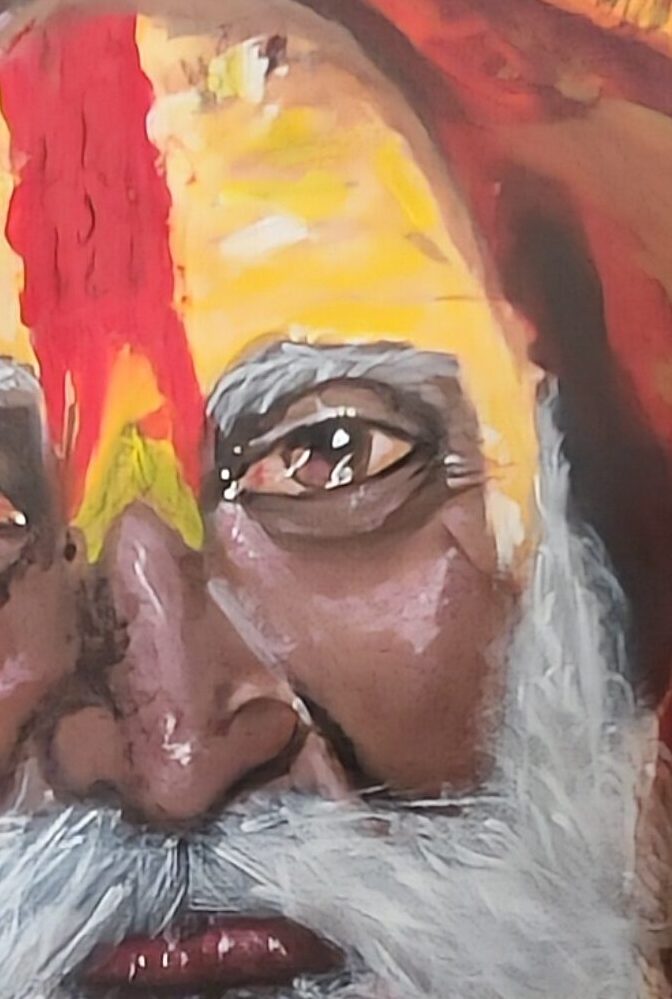
This piece evokes both nostalgia and serenity, inviting reflection on the soul's journey toward surrender and peace. The muted background and soft lightning enhance the emotional depth, making this painting not just a visual experience, but a spiritual encounter.
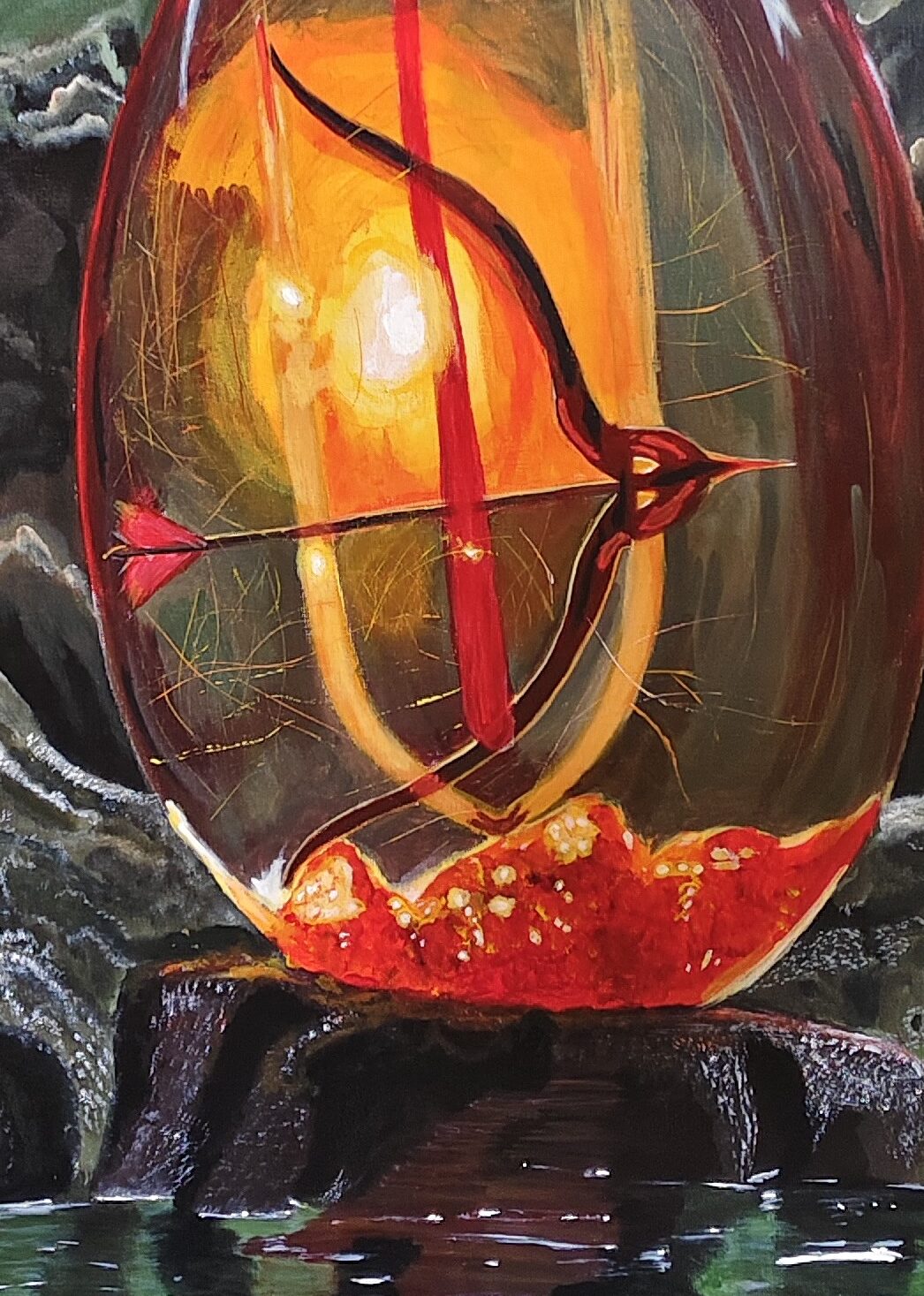
Within this transparent sanctuary lies a bow and arrow, not as instruments of war, but as emblems of spiritual resolve and cosmic alignment. Their form is graceful, etched with fine detail, suggesting both tension and tranquility. Alongside them floats a sectarian mark—the sacred tilak worn by Hindus—rendered in radiant hues of saffron, vermilion, and ash. It hovers like a flame of devotion, untouched by gravity, glowing with the quiet intensity of inner awakening.
Color Palette
The painting is bathed in a warm, meditative palette:Golden yellows and amber: Dominating the sunlight and reflections, evoking divinity and illumination and water suggesting purity and serenity.
Earthy browns and greys: Found in the stones, grounding the composition with natural texture.
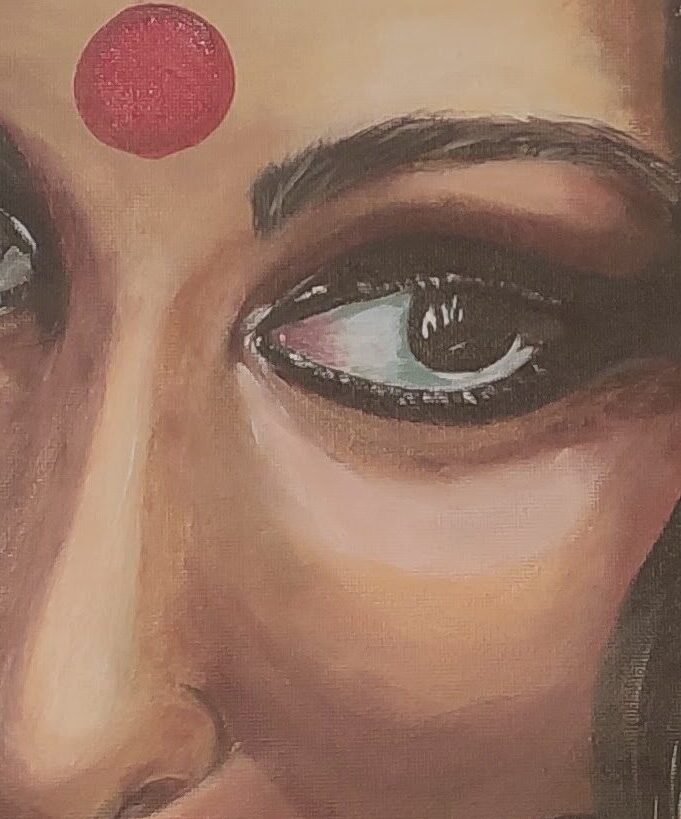
The composition honors traditional Indian aesthetics through the symbolic vermilion bindi, while subverting standard portraiture by pulling the viewer into breathless proximity with the subject. The intricate realism of the glossy lips and the moist, side-glancing eyes creates an arresting atmosphere of shared secrets and vulnerability.
To protect the artwork from unauthorized reproduction, only a select portion is displayed on this site.